Executive Summary
Building and maintaining UI consistency across complex enterprise B2B procurement and supply chain workflows requires rigid component governance and flexible authoring tools. As a Lead Product Designer dedicated to JAGGAER Direct, I focused on establishing scalable design token architecture, defining system governance, and bridging visual foundations into AI-assisted design environments.
By translating our design system standards into structured prompt contexts for AI design tools, we established a self-service pipeline where Product Managers could input natural language requirements to generate design-system-compliant mockups instantly, streamlining rapid prototyping and significantly reducing handoff overhead.
The Challenge: Scaling System Governance Across Teams
Enterprise platforms like JAGGAER manage vast, data-heavy interfaces—multi-step sourcing wizards, granular data tables, dynamic approval matrices, and complex dashboard configurations. While visual libraries establish baseline consistency, traditional handoff models faced structural friction as we transitioned from static, canvas-bound Figma components to an AI-ready, Claude-driven design system context.
Shared tokens, component Blueprints, accessibility rules, & machine-readable AI context schemas.
Manual component detachments, visual inconsistencies, static canvas spec handoffs.
Standardized primitives, semantic JSON schemas, and structural layout blueprints.
Machine-readable rules empowering prompt-based, system-compliant UI generation.
Translating visual Figma variables into code-level semantic tokens required manual verification and dev translation without machine-readable context.
Constructing realistic, data-dense enterprise prototypes manually was time-consuming for designers and inaccessible to PMs wanting to sketch initial feature flows.
Early product feature wireframes created during rapid discovery frequently used non-standard components, leading to redesign cycles before AI guardrails.
System Architecture & Blueprint Governance
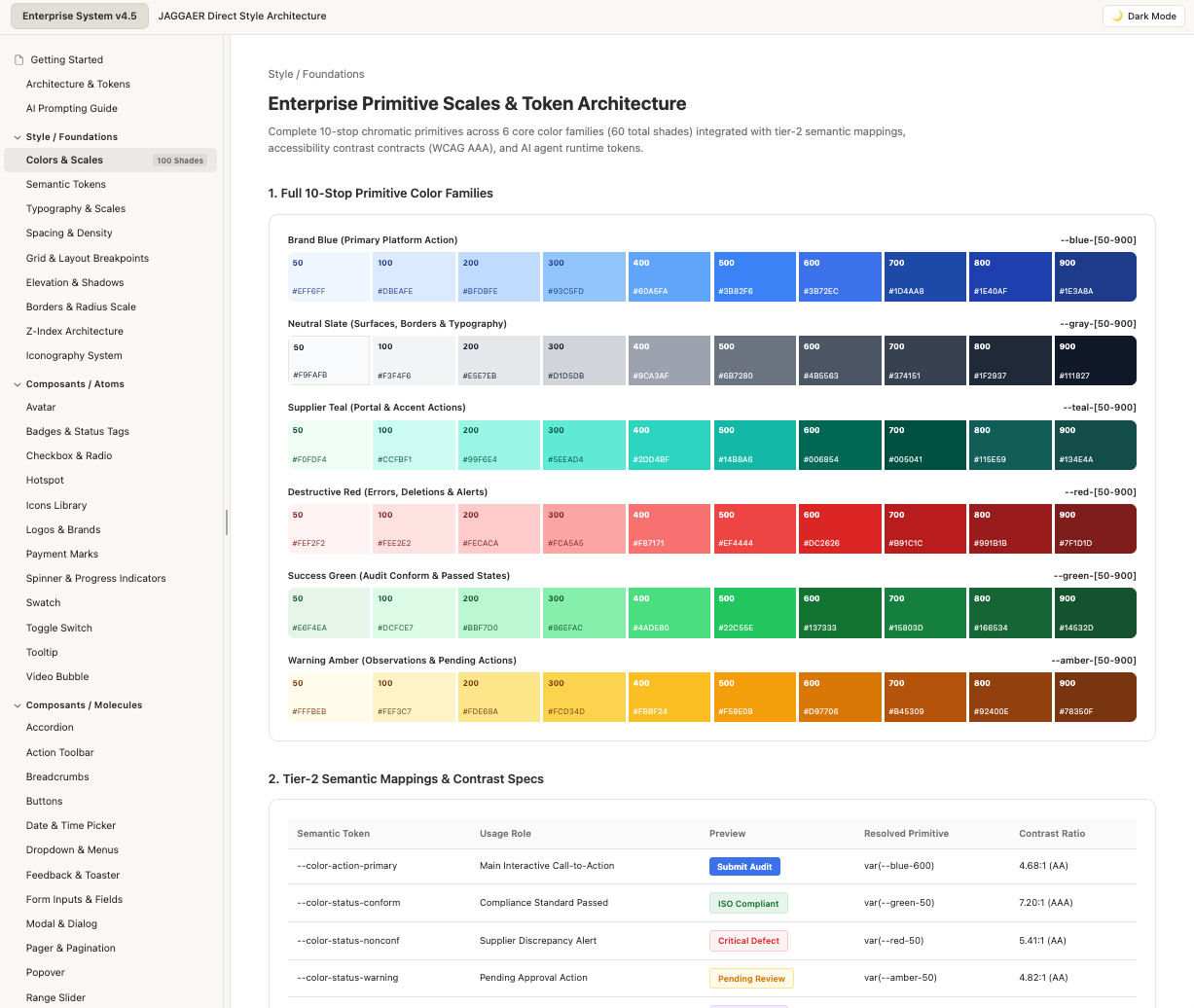
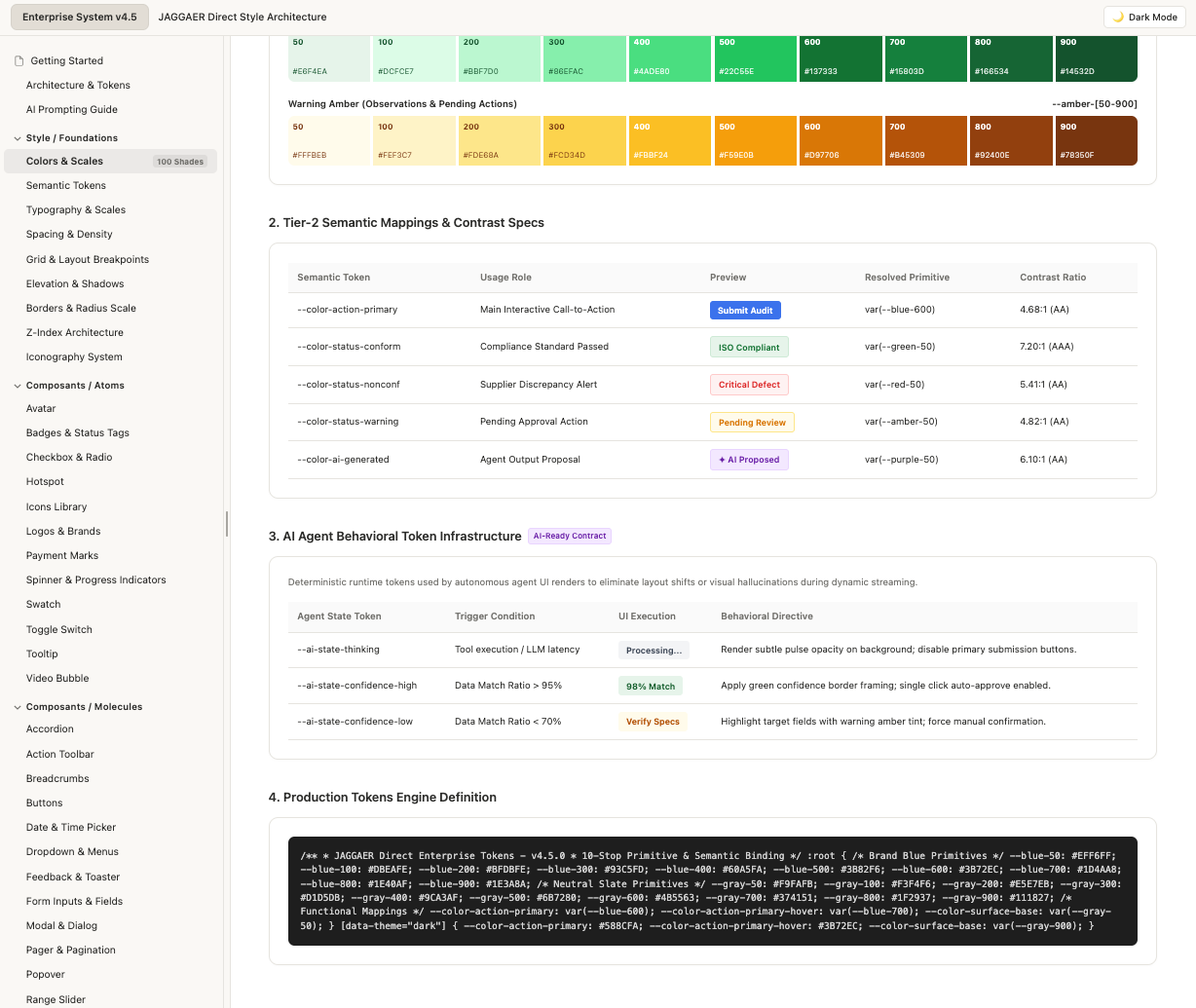
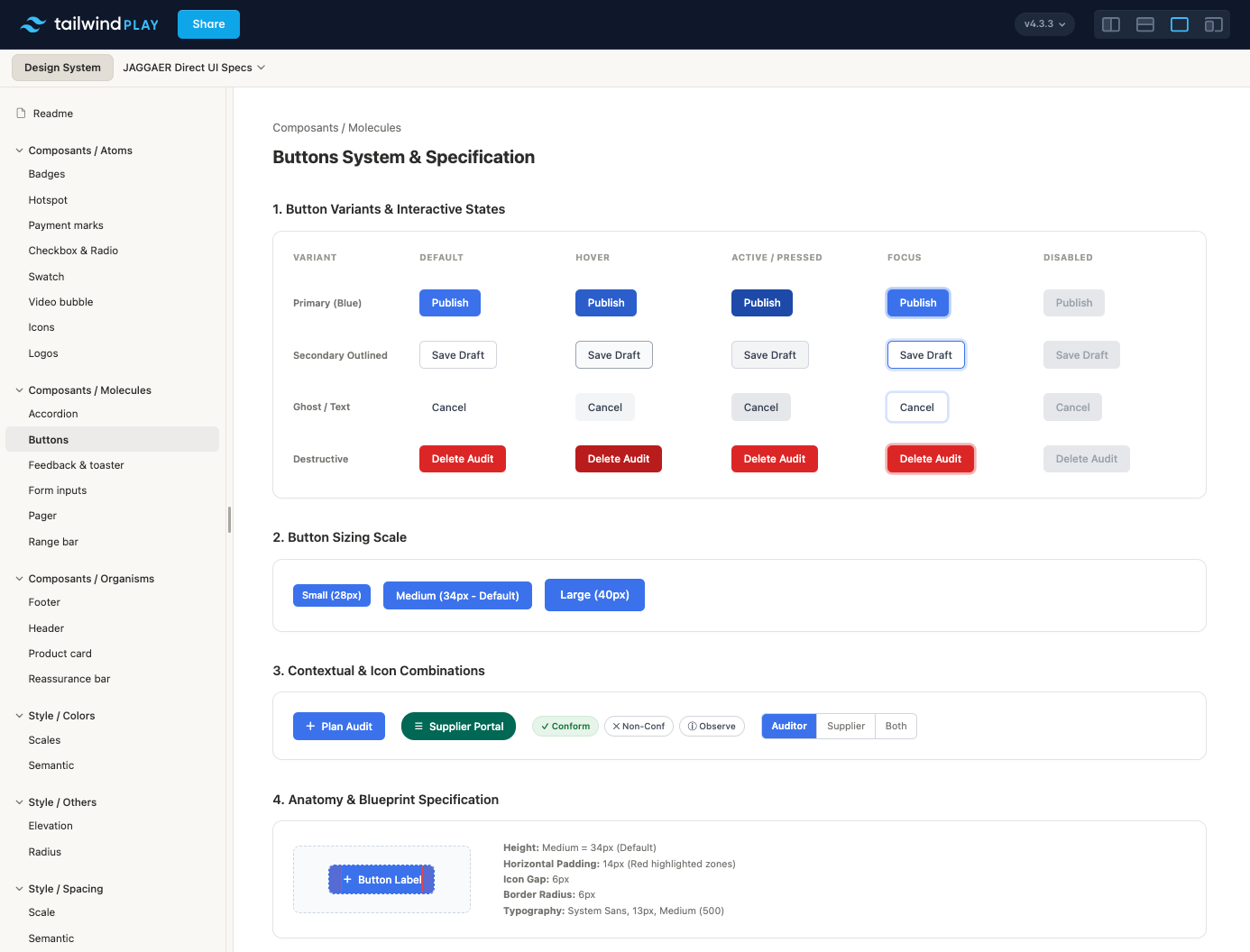
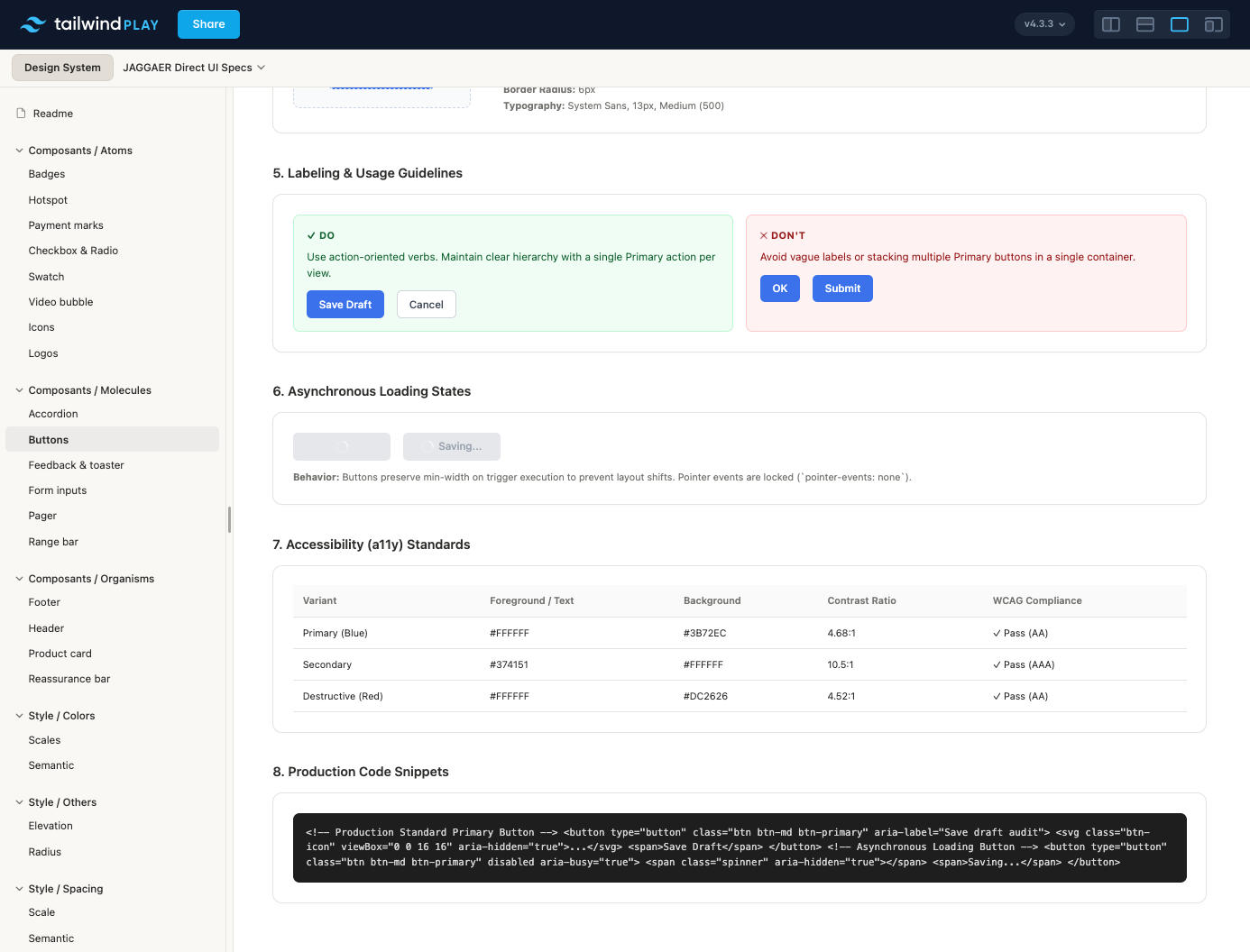
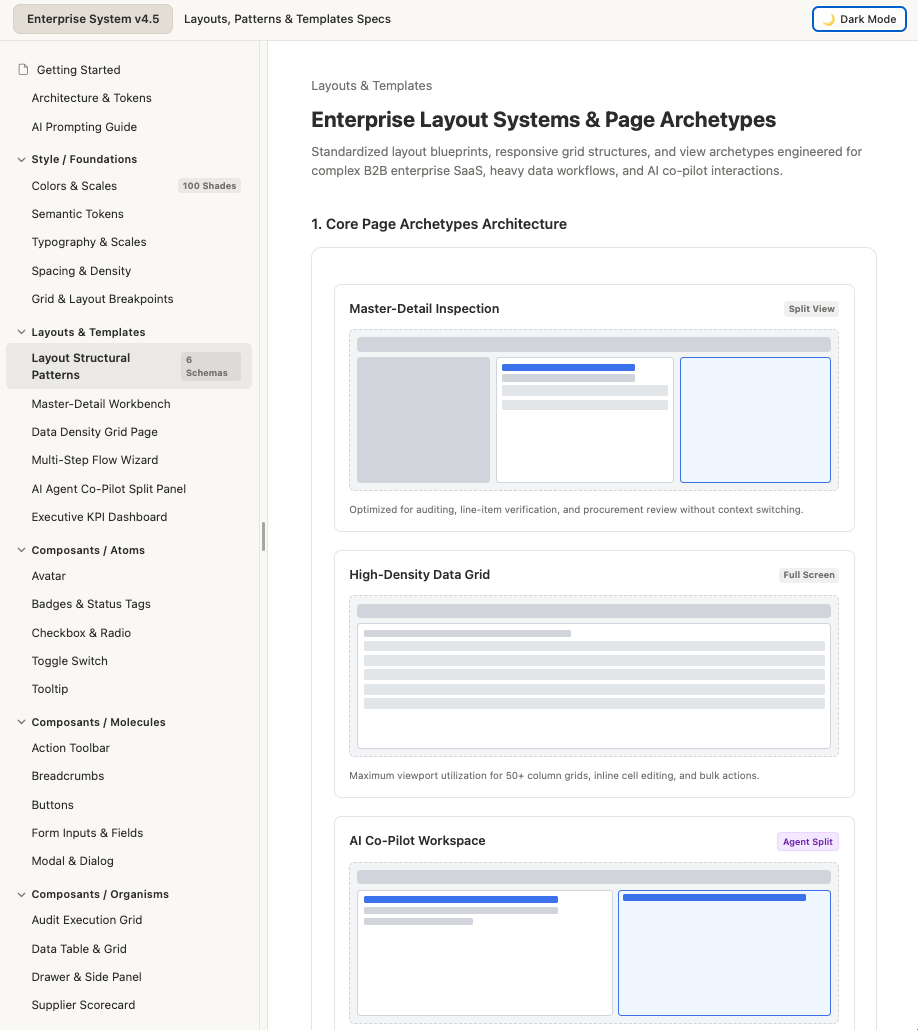
Standardizing primitive token scales, component blueprints, and full-page layout archetypes established the programmatic rules required for both human designers and AI generators.
-
Token Hierarchy: Restructured variables into a three-tier model:• Global Primitives: 10-stop scales across blue, gray, teal, red, green, and amber color families.• Semantic Tokens: Contextual bindings (e.g.,
--color-action-primary,--color-status-conform).• AI Behavioral Tokens: Runtime state directives (e.g.,--ai-state-thinking,--ai-state-confidence-high).
Prompt-Driven PM Mockup Generation
One of the primary goals of this architecture was bridging the gap between product management requirements and design system compliance. By indexing design system tokens, layout blueprints, and component schemas into machine-readable prompts, we empowered Product Managers to generate fully compliant UI concepts directly from natural language.
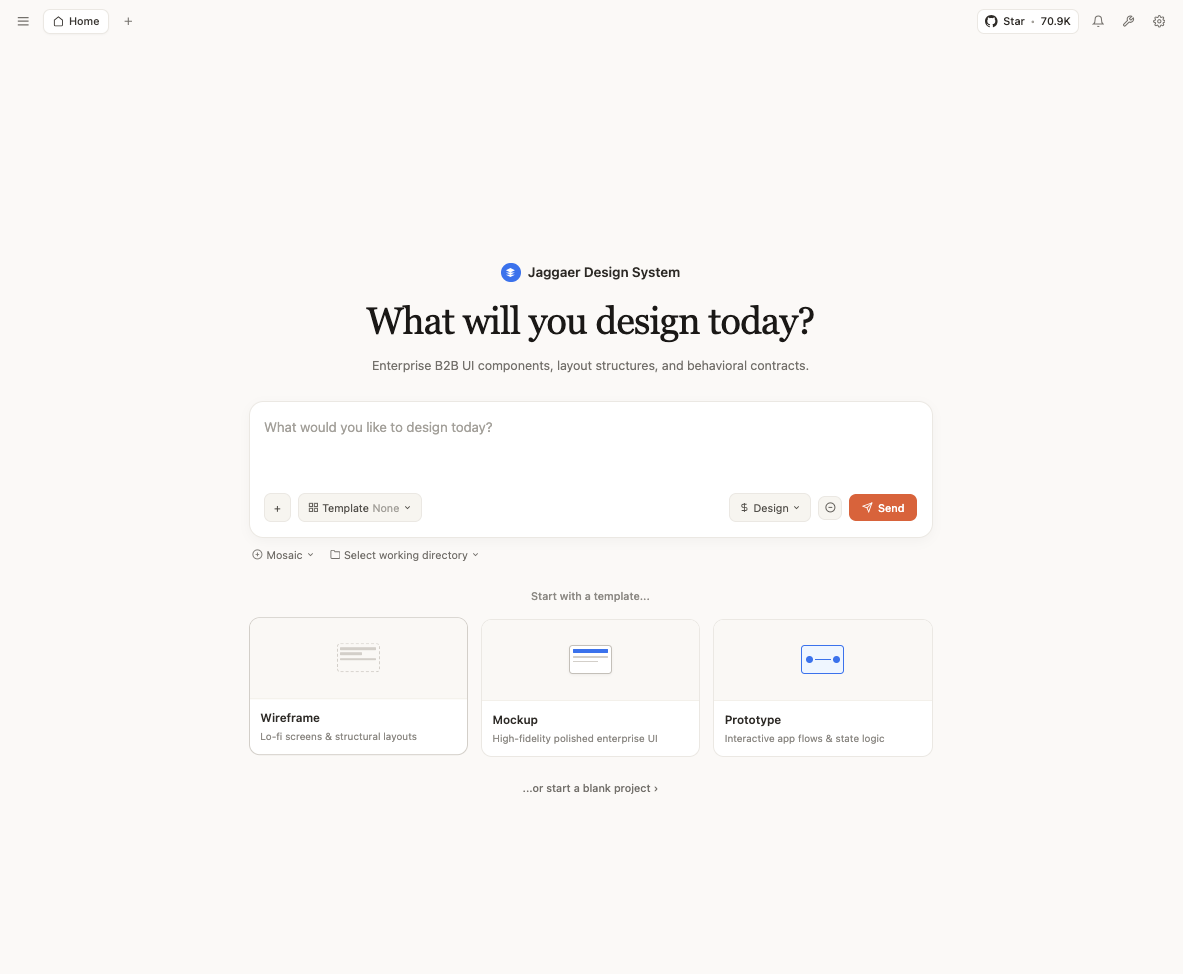
Structured System Prompting
Product Managers input natural language feature stories (e.g., "Create an audit grid with status flags and primary action buttons"). The context layer automatically restricts output to approved tokens and component archetypes.
Zero-Drift Self-Service
PMs get immediate visual validation during discovery without creating off-brand wireframes or waiting for dedicated design sprint allocation for preliminary concepts.
Impact & Strategic Outcomes
Transitioning to machine-readable token schemas and AI-assisted design contexts fundamentally reshaped cross-functional product delivery across all four platform stacks.
PM discovery mockups generated in minutes rather than days of manual canvas work.
Zero non-standard color or spacing overrides in AI-generated interface prototypes.
Direct mapping to frontend code JSON schemas eliminated manual UI translation backlogs.
| Metric / Dimension | Traditional UI Handoff | AI System Integrated Workflow |
|---|---|---|
| Prototype Velocity | Hours/Days in visual canvas tools | Minutes via direct PM prompt entry |
| Token & Scale Adherence | Manual review across design/dev review meetings | Enforced at prompt context boundary |
| Cross-Platform Sync | Disparate design libraries across 4 product teams | Single source of truth via unified Mosaic tokens |
| Dev Alignment | Static specs translated manually | Generated layouts map to production tokens |
Democratized Prototyping
Product Managers now construct high-fidelity, system-compliant feature flows independently during early discovery. This freed product designers to focus on high-impact architecture, complex interaction workflows, and system governance rather than production mockups.
Eradication of System Drift
By constraining AI prompt outputs through structured JSON token rules and layout blueprints, the platform eliminated rogue styling and off-brand UI components across all four disparate product tech stacks.